Saturday, 23 January 2016

いなり寿司 - Inari zushi

I had a year break for updating my blog - with many reasons. Now I'll start again but not as frequently as I could do before.

Starting with one that quite simple - as long as you can make right sushi rice.


Inari zushi


Sushi rice wrapped in a deep fried tofu call "Oage", seasoned in sweet soy sauce flavor. 
Everyone like this.

Ingredients (for 12 pieces):
 - 6 slices of Oage (can be found in any Japanese glossary shop, usually packed in 2 or 3 and frozen)
 - 1/2 cup Men-tsuyu (can be found in any Japanese glossary shop, or you can prepare Vegan one following bellow section)
 - 1 cup water
 - Sushi rice (prepare following the linked page but summary of ingredients are below):
     - 3 cups short grain rice, Japanese, Korean or Chinese one
     - 3 T sake
     - water as needed (see detail in the linked page above)
     - 150 ml sushi vinegar or below a)
     a) 135 ml rice wine
     a) 90g sugar
     a) 30g salt

 * some hot water for cleaning oage

<How to prepare Vegan Men-tsuyu>
Men-tsuyu is a typical sweet soy sauce base sauce, used for eating soba, templa and many other Japanese cousins.
You can buy one in bottle at Japanese glossary shop like here, or you can make them at home.
Proper Men-tshuyu requires a proper dashi, made from konbu and dried fish flakes.
Since my mother in law is almost vegan, this recipe is complete vegan style.
Ingredients:
 - 1 thumb nail size cut of Kombu
 - 3 heap T sugar
 - 1 T sake (Japanese rice wine)
 - 1/2 cup soy sauce
 - 1/4 cup water

Put all in a sauce pan, leave it for 10 minutes, then gently boil them with melting sugar by medium heat. Take kombu once the sauce start to boil, then stop the heat.
I usually make in much larger quantity, bottle them and keep it in fridge - it can last for a month.
It is concentrated; you'll need to add some water if you want to use it for templa or soba.

<How to prepare Inari slices>
1. Usually, sold oage has too much oil remained in it, we need to clean them first. Cut the oage slices into 2 pieces, so you can make 2 bags from 1 slice, then soak them in a bowl of boiling hot water. You can use from freezer directly, it will melt in the hot water.
2. Carefully squeeze the hot water out from pieces, then pat dry each piece of oage between kitchen paper to take off remained oil and water out.
3. Place Men-tsuyu, water, and slices of oage in a sauce pan, start cooking in low heat, move them around, up and down to make all slices well cooked in the sauce until almost no sauce remain in the pan. Take them out on a plate and leave it to cool down.

<How to prepare Inari zushi>
3. Prepare sushi rice - see this page.
4. Carefully open every inari pieces as bags without breaking them. If inari doesn't open easily as a bag and this is difficult, then place the inari on cutting board or clean surface of kitchen table, roll over by a cooking pin (or any clean roll should do).
5. Place about 2 to 3 table spoon of rice in each inari, lightly pressed in to bottom of bag by the spoon, then fold to close the bag and place it up side down.
6. Serve it with slices of gari and soy sauce if you prefer.

Note: sushi rice gets really hard and dry taste once you keep them in fridge. Don't worry, Inari is tasty in warm too; place on a plate, cover by clingfilm, you can warm them in microwave for a minutes or so, then it will be back to same soft nice taste. Of cause you don't do this to the sushi with fish!

Home style Osechi 2016

Osechi is the meal for new year celebration, usually cooked through end of year and served to family and any guest visit home through the new year period.
Originally those needed to last for a week so seasoned quite salty.
Now a days its more for family gathering and healthier tasting.
And easy more, you can parches them as a box set in Japan.
But here in UK, I have to prepare all by myself...
Left: Inari sushi (sushi rice wrapped in a thin deep fried tofu seasoned in sweet soy sauce style)
 Right up: Kinpira gobo (Carrot, gobou root and mooli skin fried in kinpira style - sweet soy sauce and sesame oil) 
Right bottom: Kinpira renkon (lotus root in kinpira style)
Left top: Tezuna konnyaku (Konnaku potato jelly fried in spicy soy sauce taste)
Right top: kazunoko (Pacific herring roe seasoned with sweet soy sauce  taste)
Center: Tataki gobu (gobou root in sesame sauce )
Left bottom: Kobu-maki (Carrot and gobo root wrapped in Konbu)
Right bottom: Date-maki (fluffy egg roll)
Right top: Shime-saba (cured & marinated mackerel)
Left bottom: Nijimasu no sashimi (cured rainbow trout slices)
Left top/right bottom: Kouhaku kamaboko (kamaboko: fish cake slices)
Center: Ikurano no shouyu-zuke (Salmon roe seasoned with sweet soy sauce  set in Yuzu citrus cup)
Left: Namasu (mooli and carrot marinated salad)
Right: Kikka kabu (Baby turnip decoratively cut in chrysanthemum flower and marinated)
Nimono (satoimo umani, hana ninjin, kame shiitake, gobou umani, hourensou)
Kenchin
Left/right: Nishoku renkon (2 coloured lotus root slices flied in sweet rice vinegar)
Center: Kokabu senmai-zuke (cured thin sliced baby turnips)
Chirashi sushi
Left top/right bottom: Sakura mochi (sweet bean's paste wrapped in rice & flour pan-cake)
Right top: Kuri no amani (Chestnuts in syrup)
Anzu kan (apricot in Kanten jelly)
Few missed in photos:
Renkon no agebitashi
Nishoku tamago
Ebidango
Shigi dori.

Sunday, 20 July 2014

Home prepared herbal olive oil


There are few condiments and sauces that I cannot ever allow to run out at my home.
Asian line-ups are as you can imagine, but not limited to.
This is what I have to have all year around, one thing that I can't allow to run out.
A lot of shops sale herbal olive oil with the different spiced version, but in my opinion, homemade one is the best. You know what's in it, which kind of olive oil is in, and you can keep making it.
And the biggest difference, it is as fresh as you make!
I use the rosemary from my garden in summer, the taste of pleasure from my own home.

I lined up the ingredients in my favourite balance, but it's totally up to you what to include and how much in the bottle. Try to choose "hard" things (e.g. dried chili, condiments, nuts etc.) and better to avoid the ingredients easy to spoil (e.g. meat, fish, leaf salad etc) unless you meant to use up in once.

Ingredients:
1 stem rosemary
2 small bay leaves
1 small garlic clove
4-5 black pepper corn
1 garlic - pealed
about 10 fennel seeds

Method:
Just bottle it. You can feel the herbal flavour from the right next day.
Basically you don't need to replace the all things in the bottle every time, because the olive oil preserves the ingredients in the bottle quite well.
Point is, keep adding more oil to the bottle whenever you use more than the line of ingredients in the bottle and keep all things under the oil.
Rosemary leaves will come off from the stem but it will not going to get spoiled.
Yet, I do change them about once per about 5 times full refill usage.

This is just when I bottled it. Both the rosemary and olive oil are shinny green.


Then this is the next day, you can see that the rosemary green already started to melt into the olive oil and the oil has fresh rosemary aroma.

By the time, the taste will change to more mature and stronger flavour, and that's the another fun.
I use them for pizza dough, salad dressings, meat-sauces, pastas and more.
My latest best favourite way is, dipping a piece of freshly baked foccacio or crunchy baguette in the dish of this oil from the first 2-3 days with freshly clacked black pepper, sea salt and grated parmigiano cheese. This cannot be starter, because you can't stop eating it :-)

Saturday, 19 July 2014

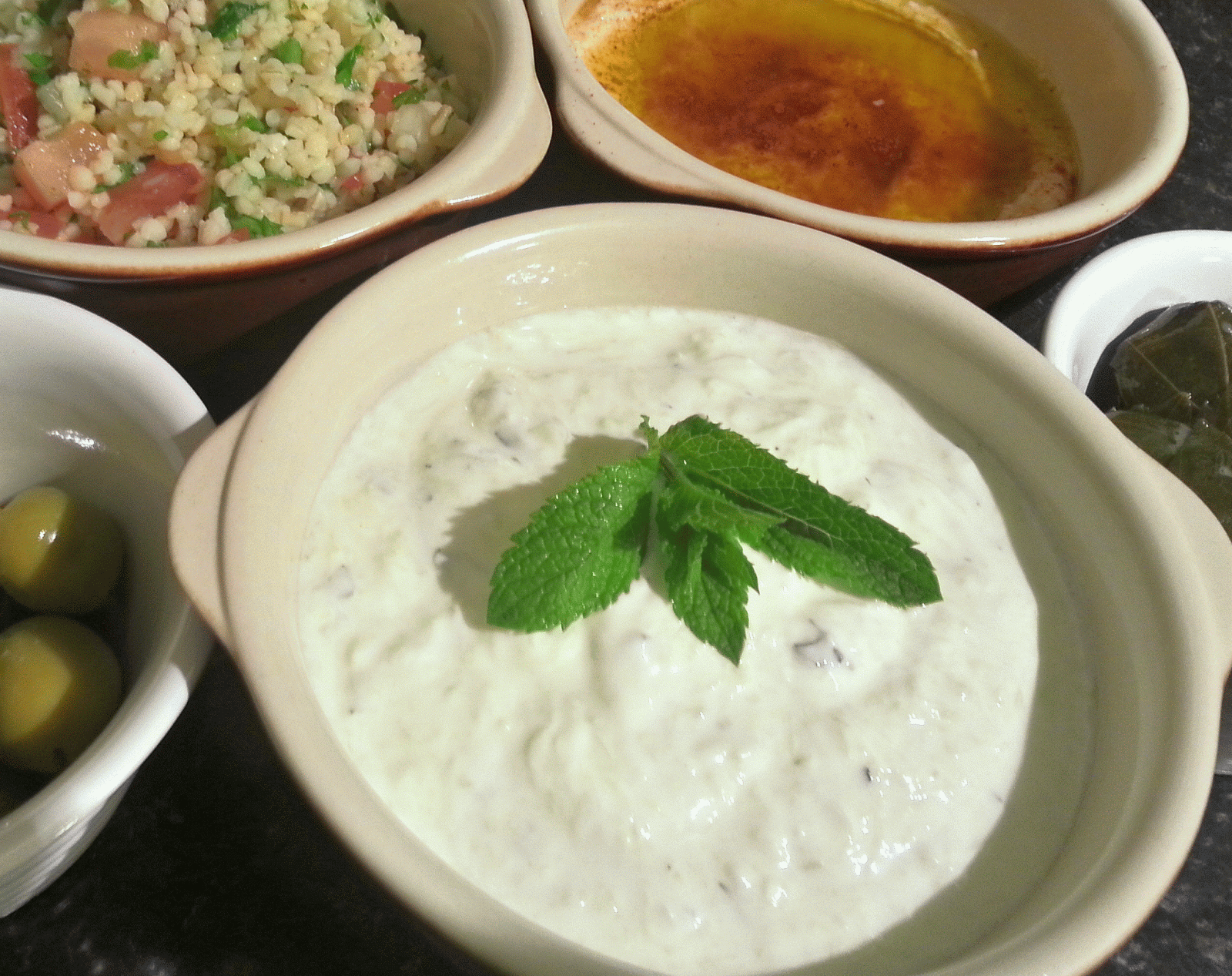
Tzatziki - Greek cucumber & yogurt cream


Tzatziki is the one thing I learnt before knowing the name of the dish.
There were excellent Greek restaurant in Pasadena LA, it was near to our home and we went there for all good occasions. So much great memories at the restaurant and it was with completely new type of taste for me at that time. I even never had an idea of using yogurt for cooking so at the beginning, I couldn't tell what even was the base of cream.
Once I moved UK, I realise that Greek food is not cheap here (or any eating out is not cheap compare to US), so my stomach forced me to learn all good taste I could recall.
So the recipe was from several books and people, but the taste adjusted to what I liked.
Nice to serve with all other great Greek foods especially with the oven grilled lamb meatballs in a pita bread.

Ingredients:
1 cucumber - skinned and grated
300g yogurt
1 garlic - crushed and chopped
about 5-7 leafs of mint - sliced and chopped
1/4 tsp salt
some black pepper as you like

Method:
1. Prepare the vegetables: cut in half and skin the cucumber until near the end (leaving a bit at the end allows you to hold the cucumber easier) then grate it with a grater (I use the one for grating the parmigiana cheese). Put it out on a strainer, squeeze them as much as you can to drain out all liquid.
2. Crush the garlic by a side of your knife, then chop it to very fine mince.
3. If you’ve got a bunch of mint, take only the soft leaves, wash it under water then drain the water out. I like the mint short thin strings in this cream, so once slice them all finely then turn it and chop them roughly.
4. Combine all in a bowl then keep it in the refrigerator for few hours.

5. Serve them with some grilled meat or fish; our favourite is to have some with the oven grilled lamb meatballs in a pita bread.

like this :-)

Wednesday, 16 July 2014

ささ身のサラダ - Chicken breast salad


This salad is a long running favourite dish for our family, usually heavily routine through the hot summer. It can be nice nibble for serving with drinks, also quite adequate for serving as a main dinner plate on its own, or with some white steamed rice, especially during the hot summer days like now. It looks very simple, but the threaded chicken absorbs the fresh sauce and a hint of sesame oil invites you to eat more. Because you can leave it for overnight, it's nice for party and pot-luck-lunches.
My mom's original recipe uses threads of Zha Cai, is a spicy Sichuan pickles, but the Japanese adapted seasoning one (means not-so-spicy), which either not easy to find or very expensive even you find in here UK.
My recipe uses cucumber for replacement, and actually has gained the better response from my guests here.

Ingredients (3-4 people):
2 big slices or 3 small slices of Chicken breast
2 slice ginger
1 leek - green part only

4 x 5cm leek - white part only (about 5cm x 2 per each leek, 2 leeks)
1/2 cucumber
1tsp salt

6 Tbsp sushi vinegar
3 Tbsp soy sauce
1 Tbsp sesame oil
1/2 tsp sugar
some black pepper

Method:
1. Prepare chicken: boil the chicken breast with 2 slice of ginger (with skin but cleaned) and green part of a leek (cut of very end and clean the soil out under running water before use) for about 20-25 minutes, then leave them in the boiled water until all cool down.
2. Meanwhile prepare vegetables: we need 4 pieces of 5cm length white part of leeks, usually you can take up to 2 parts per one whole length. Take the most outside skin off if its not soft enough (US leeks may need to peal 2 skins off...) cut off the very ending with loots, then cut them in to 5cm length, slice them into thin julienne. If the leek is spicy as the one from Japan then you may need to soak it in a bowl of water for 5min before use.
3. Skin the cucumber, cut in half along with the length, take off the center transparent par will seed using either knife or spoon. Cut in to half width again, the slice them in about a half cm width slices.
4. Put all slices of cucumber in a small bowl, add the 1tsp salt and mix them well, then leave it for about 10min.
5. Put the cucumber slices on a strainer, wash out the salt under running water well, then grab a hand full of slices at once and squeeze out all water in your hand. Repeat that for all slices. Doing so, it will prevent making the salad soggy later, and keep the cucumber crunchy in the salad.
6. Prepare the sauce: just mix the listed ingredients well.
7. Once the chicken breast get cool down, then break them into few small pieces, and thread to the string one by one as thinner as your patient can handle. The thinner you can thread the better absorb the sauce and tastier later.
8. Mix the threaded chicken, julienne leeks, sliced and squeezed cucumber in a bowl roughly, then pour over the mixed sauce, mix the whole thing again.
9. Leave it in your refrigerator for at least 1 hour, even better if you can leave it for overnight before serve.

* If you can find a good Zha Cai  then you might want to try my mom's version; you firstly clean the Zha Cai out from soaked spicy juice well. If it is a whole one then slice it, and then cut it into threads. Soak the threads in a cup of water for 5 minutes and drain out the water before mixing it with other ingredients at step 8.


Friday, 11 July 2014

Asparagus cream


This wonderful recipe was from +Loretta Sebastiani, it was a great hit in my family. She has introduced this in foodies+ as a part of Seasonal flavors on canapé top or seafood tartine unfortunately it's not easy to find fresh seafood to serve it together, so I served this simply as a cream with all other Mediterranean style vegetables.
This picture was from my son's birthday, my first trial, that I used LactoFree cheese instead of ricotta for my mother in law's diet. Still the freshly prepared cream was so nice on the crunch toasted slice of budget.

Her recipe page is here.

Sunday, 6 July 2014

やきうどん: Fried Udon noodle

I had long break on this blog due to my main occupation, I knew the busy time coming but the last project took much longer than I expected....


Anyway, this is a simple recipe easy to remember. Udon is kind to your stomach and nice for digestion. Good to go as vegetarian without pork in.
Lately the packed soft Udon noodle become easy to reach, it's an "instant" style for us Japanese compare to dried noodles but really useful for this quick cooking.

Ingredients (per person):
1 soft Udon pack
1/4 onion - sliced
1/4 carrot - sliced
1/4 bell pepper - sliced
1/4 leek white part - sliced sliced
1 slice of bacon or equivalent amount of sliced pork berry
cabbage - equal amount as bacon

* Idea is, onion, carrot, bell pepper and leek are about same amount, then cabbage and bacon are in same amount and about double amount of onion.

* 2 kinds of Udon noodle you can find in market in UK

1/2 pot of water boiled in kettle
2 + 1 Tbsp vegetable oil
2 Tbsp soy sauce
2 tsp Worcestershire sauce
1/2 tsp salt if using pork berry
black pepper
(Optional) Katsuobushi (dried bonito flakes)
(Optional) Shichimi (seven flavor chili pepper)
* left: Shichimi, right: Katsuobushi - those are sold in Japanese glossary shops.

Method:
1. Slice onion, carrot, bell pepper and leek. Idea is slice them in almost same size/thickness so all can be cooked at same time.
2. Cut bacon to 1 to 2cm width, or slice pork berry thinly.
3. Cut cabbage into about 1 to 2 cm square.
4. Heat up a Chinese wok or a large pan on high heat, then put 2 Tbsp vegetable oil once the wok gets enough hot. Spread the oil all over the wok, then take out the excess of oil out on small dish (not plastic!) If you are garlic lover, put a crushed garlic before taking out oil then take it out with the oil, so the oil gets the garlic aroma.
5. Put onion and carrot in the wok, fry for 1-2 minutes until they are halfway cooked, then add bell pepper and continue cooking for another 1-2 minutes.
6. Add leeks and cook only for 1 minute, take all out in a pat or dish and put it aside.
7. Put back all oil again, spread through and take it off again.
8. Put the pork berry slice or bacon slice, fry until the oil start to melt and getting cooked, then add cabbage and fry until the cabbage slices are cooked. Put all vegetables back once, mix them, add pepper, add salt if it is pork berry. Put all aside again.

9. Prepare the Udon noodle. Majority of packed Udon sold in an individual small package ideal for a person. They are kind of soft but packed. It's so different if you do this trick first: Put the noodle on a strainer and place it in sink, pour over a boiling hot water all over the noodle. After pouring a half the water, then give some wagging by fork or chopsticks. Then pour over the rest of hot water. After that, pour the remaining vegetable oil from the wok and mix them well.

10. Now put the wok back on high heat, once heated up then add the another 1 Tbsp of oil in the work, spread the oil through the wok.
11. Add the noodle in the wok, put all vegetable & pork on top of it, then mix them quickly.
12. Add all soy sauce and Worcestershire sauce then mix them well. Cook until the sauce spread through for about 2-3 minutes.
13. Serve it on a large dish, pour over Katsuobushi freaks on top of it if you have. Put some Shichimi to spice it up as you like. Alternatively a bit of Nori freaks and mayonnaise are other common toppings.

Japanese version here: http://misaskitchen-jp.blogspot.co.uk/2014/07/blog-post_10.html